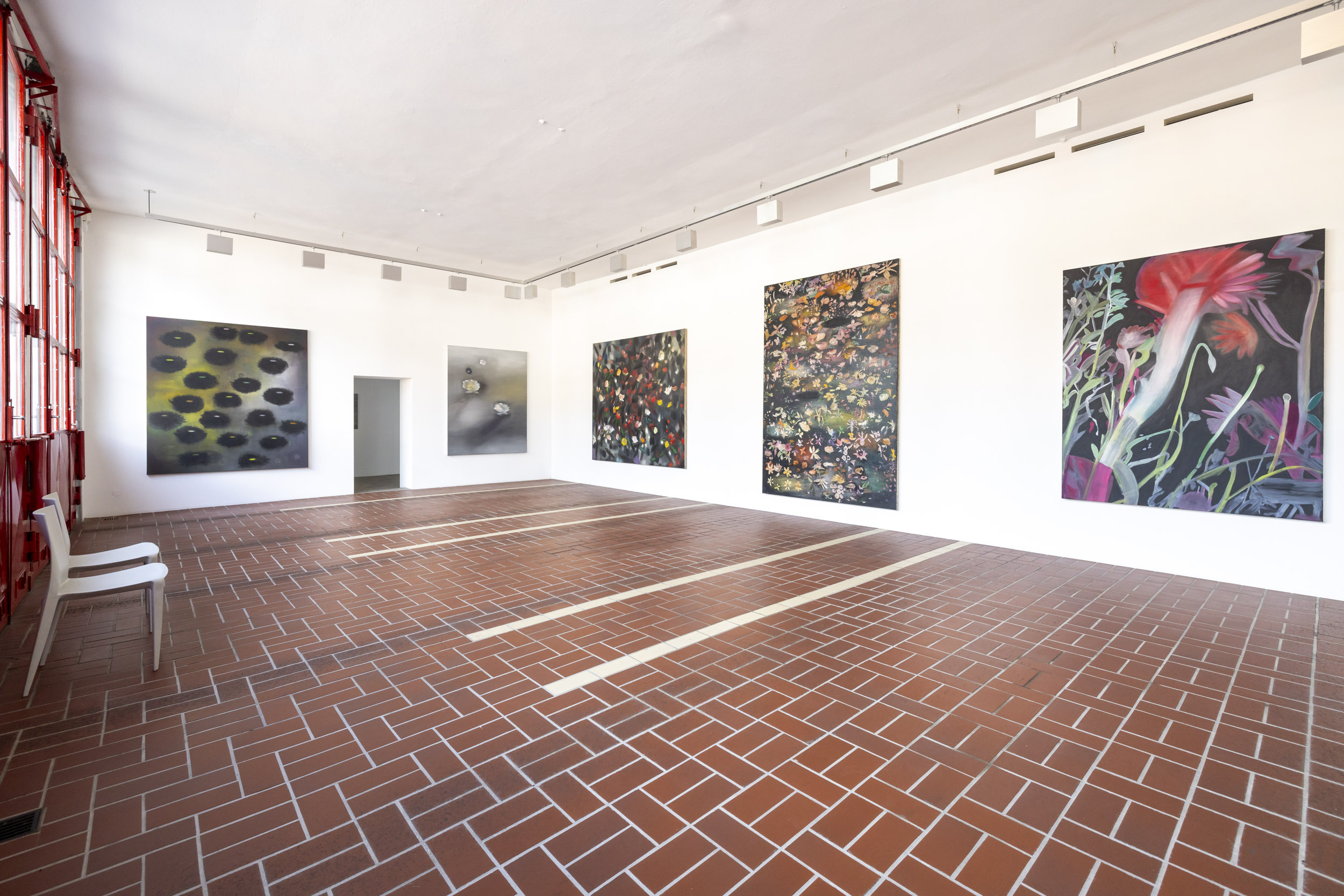
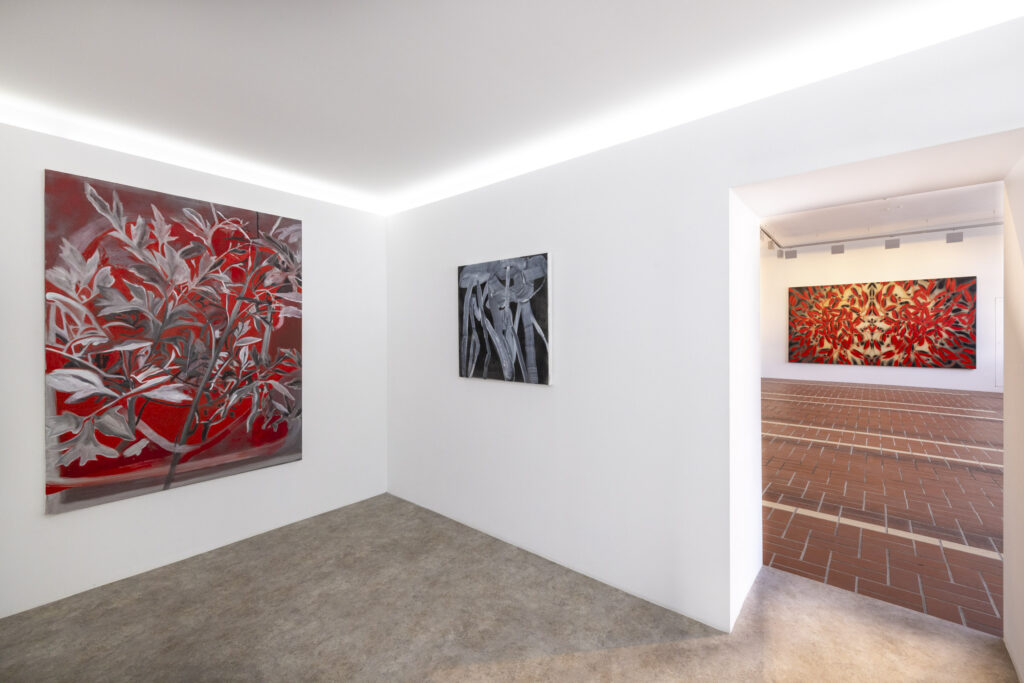
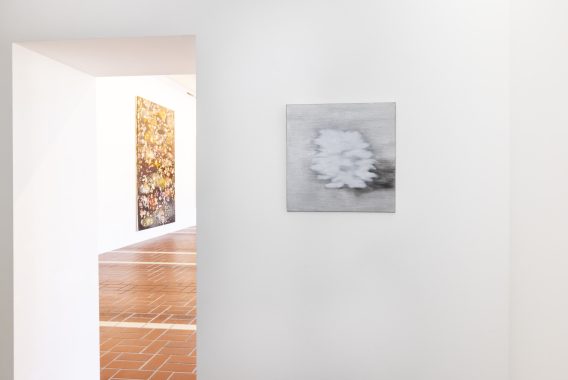
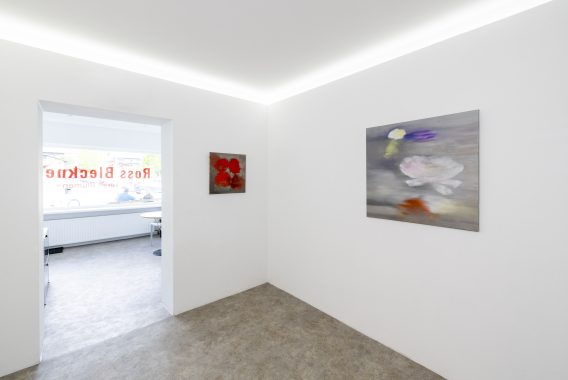
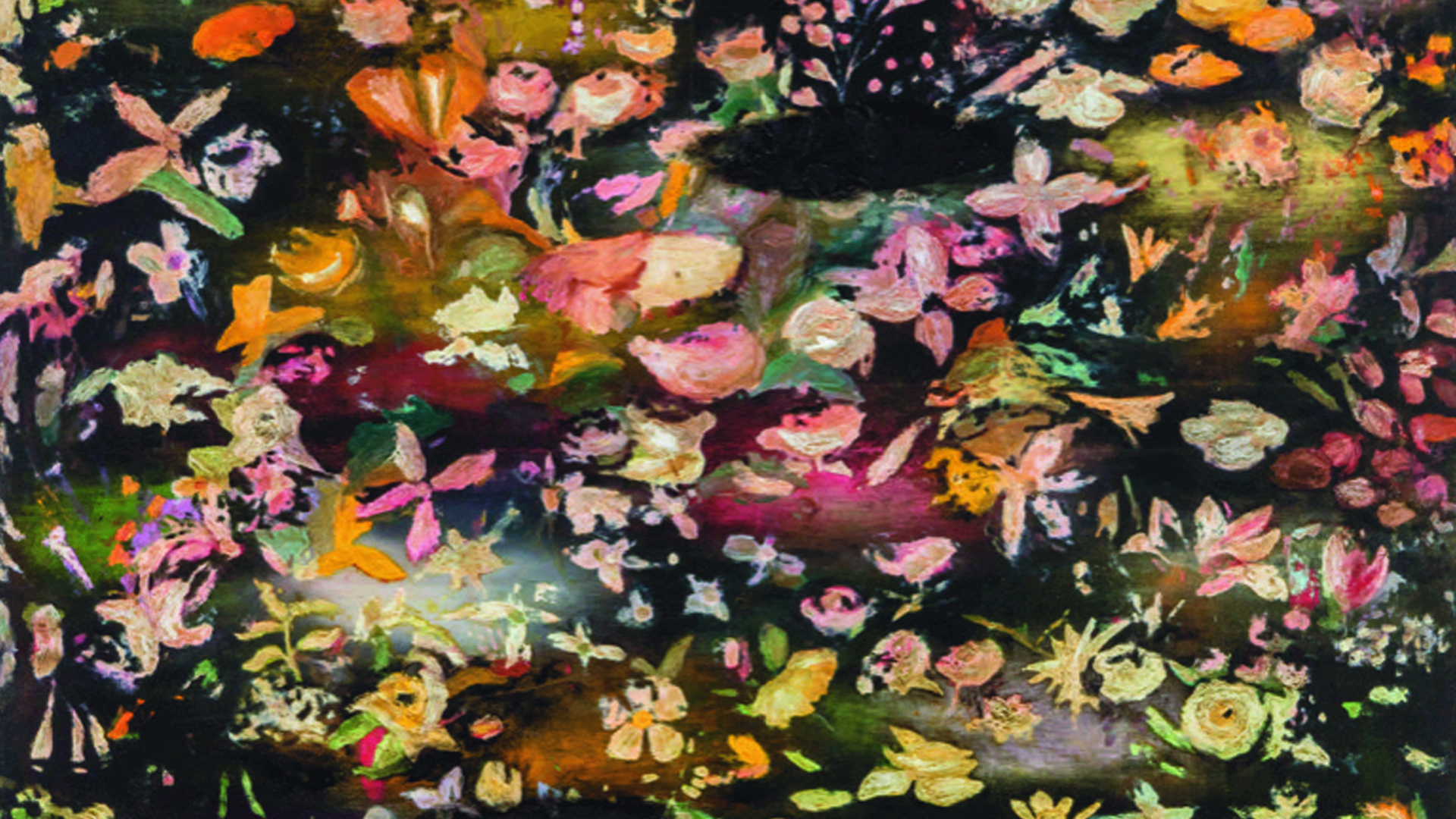
The flower paintings on display from the Jablonka Collection date from 1995 to 2022, meaning they were created during different periods of the artist's career.
„I have been painting flowers time and again for a long time, but I don’t see them as flowers. They are about the passing of time and transience,“ says the artist himself. Blossoms that seem to float above the background, a floral explosion against a dark backdrop, bold colours, blurred shapes – and, time and again, flashes of light that gleam out of the darkness.
Behind this are existential themes: the transition from blossoming to decay, the living and mortality. Since his artistic beginnings in the late 1970s, Ross Bleckner has reacted to current events in his surroundings in his paintings. The AIDS epidemic, to which he lost many of his homosexual friends, his father's cancer and death, his sister's schizophrenia - Bleckner processes all of this artistically. More recently, the process of ageing has also been part of this, which, as he says himself, fills him with dread.
His flower paintings are compositions of light and dark that glide over a surface and end in the abstract.
Light plays a major role in Bleckner’s work: „I prefer to bring out the darkness from within the light rather than superimposing it onto the light. That is my optimism, the childlike part of my brain. It wants to make things better; it wants them to succeed.“ Because: „There’s light at the end.“
Beauty is the hook
Beauty as a fishing hook
Or as Ross Bleckner once said in a video: „I think things can’t be beautiful enough.“ His flower paintings captivate at first glance and reveal themselves on closer inspection. As in the 1995 painting „Hothouse“ (photo bottom right). In this „Hothouse“, Bleckner paints the stemless flowers against a black background.
Richard Milazzo has been studying Bleckner’s paintings intensively for decades, including this painting, which he sees as a work of extremes. Against the artificial backdrop of the black ground, the sensually coloured blossoms float; in reality, they are abstract entities that are regarded as flowers. They symbolise blossoming, decay and death, as well as the polarity of life – the „delicate balance“ between life and death, sexuality and illness, extreme behaviour and political and social responsibility.
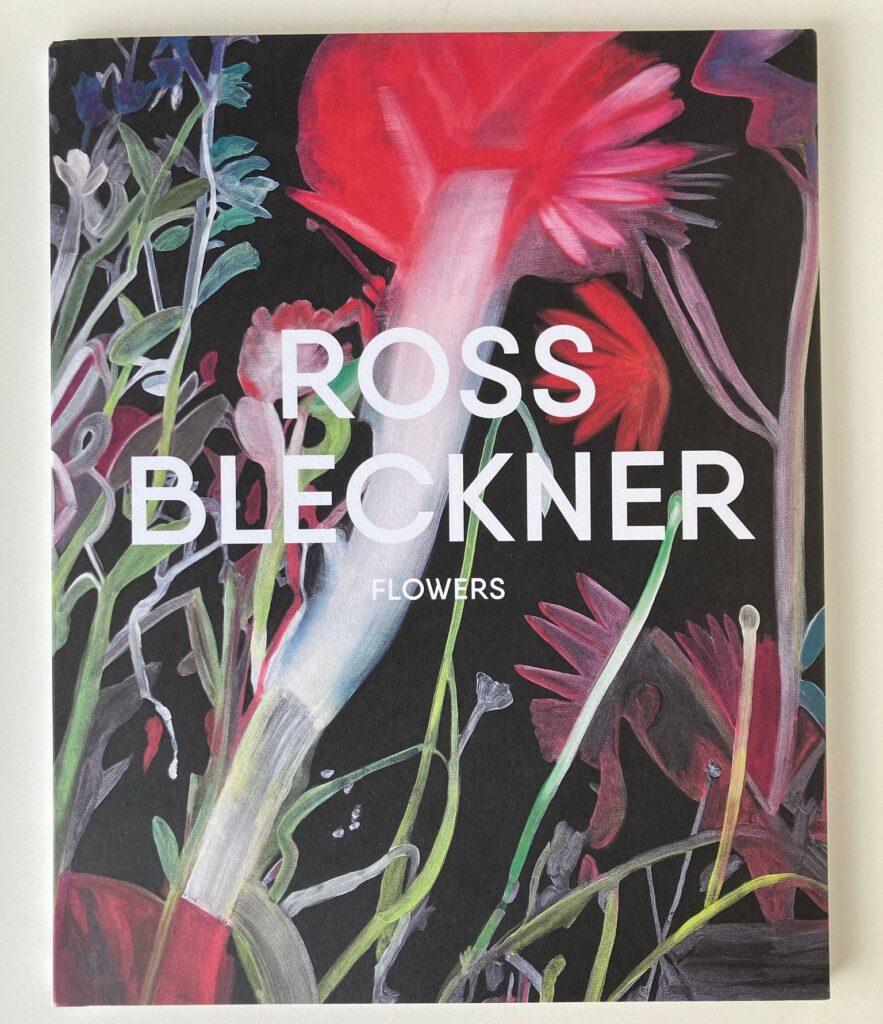
Ross Bleckner „Flowers“ catalogue“
Life is too short. There are no short cuts.
Eric Fischl says this about „Ross Bleckner’s Flower Shop“. One of the essays in the catalogue accompanying the exhibition at KiS – Kunst in Seefeld.
Catalogue with 47 pages, text contributions by Ross Bleckner, Eric Fischl and Rafael Jablonka.
€ 25,-. For members of the KiS association: € 15.
Ross Bleckner
Life and art
Ross Bleckner was born in New York in 1949. At New York University, where he studied with Sol LeWitt and others, he completed his Bachelor's degree in Fine Art before continuing his studies at the California Institute of the Arts, where he also became friends with David Salle.
His exhibition activities began as early as the mid-1970s. When AIDS became a threat to him and his homosexual friends shortly afterwards, Bleckner dealt with this in his paintings. With his Stripe Paintings, the Architecture of the Sky series and the Cell Paintings, he attracted a great deal of attention and had his first solo exhibitions in major US museums such as the Museum of Modern Art in San Francisco. All of this took place in the 80s and 90s.
His first artistic highlight: in 1995, when Bleckner was 45 years old, the Guggenheim Museum in New York dedicated a mid-career retrospective to him as the youngest artist to date as part of a solo exhibition. His works can be seen in numerous major museums around the world: Museum of Modern Art and Whitney Museum of American Art, both in New York, San Francisco Museum of Modern Art, Martin Gropius Bau Berlin, Museo Nacional Centro de Arte Reina Sofia Madrid, Kunstmuseum Luzern, Zentrum Paul Klee, Bern, and others.
Works by Ross Bleckner were also exhibited in 2020 as part of the My Generation exhibition with works from the Jablonka Collection at the Albertina in Vienna. He is represented by Petzel Gallery, New York, Mariani Mercer Gallery, Brussels, and Galeria Mazzoli, Modena, among others.
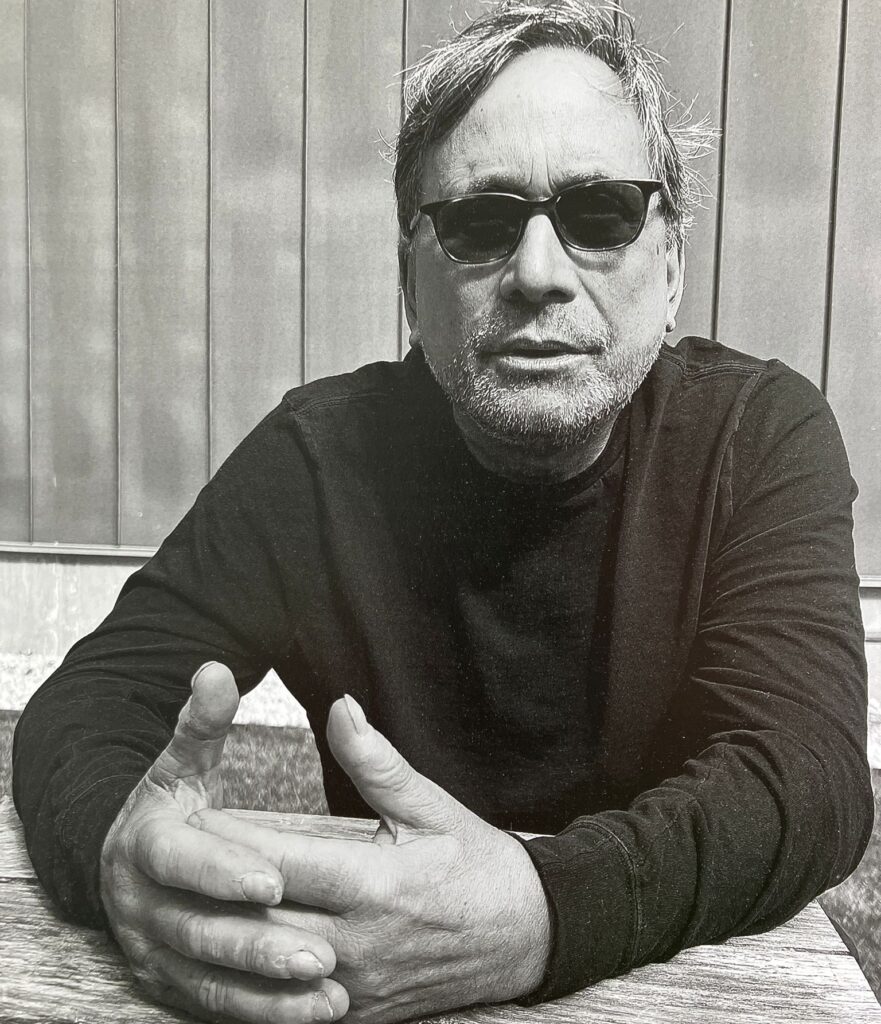
Ross Bleckner lives and works in New York and the surrounding area.